
Bridges of Baseball
Be the first to read long-form baseball stories delivered monthly.
108 Stitches
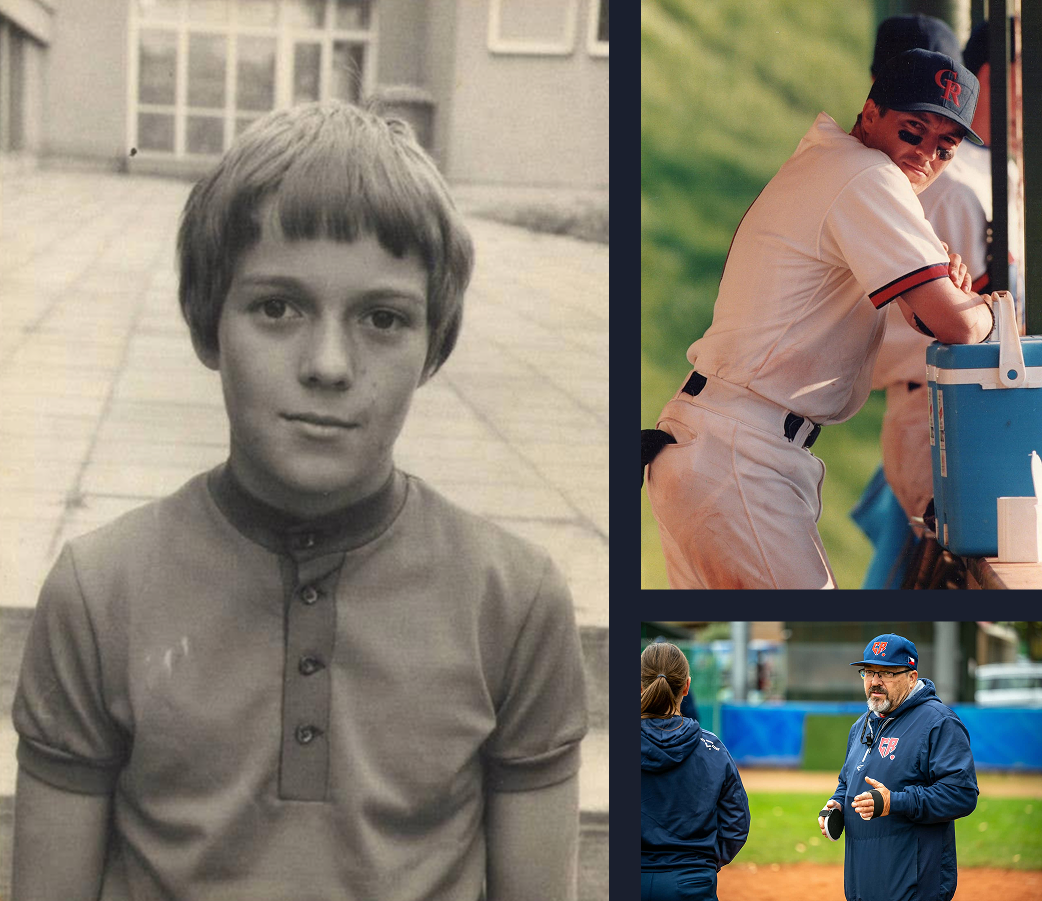
Born behind the Iron Curtain, Richard Kania first encountered baseball in a West Virginia backyard. More than fifty years on, the Czech ballplayer and coach looks back at the tanks of 1968, the Chernobyl cloud of 1986, a pair of walk-off hits one month before the Velvet Revolution, and the decades of baseball and world history that followed.
108 Stitches
There are 108 double stitches on every baseball, binding together two pieces of leather.
But I was born in July 1963—into a world divided into two blocs of competing superpowers. The USA and the Western countries, and the Soviet Union and its subjugated countries. My family lived behind the Iron Curtain in the socialist bloc, which we compared to a ship in a sea storm. Everybody is sick and throws up, and nobody may leave.
I still remember the fear and anger I felt in August 1968, when I saw Russian tanks rolling and roaring down the main street of my hometown. The free world was ruled by Rock’n’Roll, and we had our Russian Roll.
There was no hint of baseball in the region where we lived, and now the Russians were taking control of everything.
Baseball, and a Backyard in West Virginia - the late 60s
My first encounter with baseball came one year later, in 1969. I was a six-year-old in Weirton, West Virginia – outside of the troubled waters, in the United States. I learned wiffle ball in our backyard with my new friend Joe Dorsh.
Joe introduced me to this strange game where you throw the ball and somebody hits it with a bat. I was used to kicking a ball. Despite the language barrier at first, it was fun.
We had come to visit my father, who was on a study stay at Steubenville Hospital in nearby Ohio. The plan was two weeks. We liked it so much that it took us two whole years to return to our communist home country.
My father wanted us kids to keep our native language, so I went to a Polish Catholic school. The one small problem? Nobody at school spoke Polish. The bigger problem: there was no baseball team. So we played in the backyard with the local kids and teenagers. John Crow, our best hitter, sent the ball over the roof of our house almost every time up.
Then it was time to go home, and that interrupted my baseball career for seventeen years.
Baseball, and Inside the Iron Curtain – the 70s
Back in Czechoslovakia, I made do with track and field, soccer, volleyball, tennis, anything that Ivančice, a little town about a hundred miles southeast of Prague, could offer. I didn’t miss baseball that much. But when my mother saw a newspaper ad saying Technika Brno was looking for new players, I felt the pull to try out.
The twenty-mile commute by bus or train kept me from joining, but the ad brought me back to our backyard “World Series.”
The bigger story in those years was my family’s. My father was a renowned surgeon, so the regime did not dare to attack him too harshly. But the communists poured out their anger on other members of our family because of our beliefs. My parents kept it secret from me and my sisters to keep us safe.
My mother’s brother was detained by the State Secret Police after the Communists took over in 1948, and he never recovered. Shortly after his release, he died of pneumonia at the age of nineteen. My mother and her two brothers were not allowed to study at any university for a long time.
My favorite uncle, Ivan, was not allowed to finish his high school exams because “he had not solved his relationship with the Catholic Church.” Instead he served in the army’s special working units, which were not allowed to carry weapons. A few weeks before his service was set to end, he was imprisoned for having a notebook of English vocabulary words in his cabinet. He came home from prison after six years. He went to work at a factory with a lathe, while one of the guards from his prison sentence became the head of the Communist Party and later served as the last Communist president of Czechoslovakia.
As the oppression eased, Ivan finished his high school degree and earned a university degree in philosophy, while continuing to work at the same factory. He rode his bike everywhere. When he came to visit us, he covered the twenty miles faster than the bus most people would have taken. He encouraged me and taught me about my civil rights, especially freedom of speech and religion. I admired his courage. My parents were a little more careful, and had been told not to be heroes. Uncle Ivan was a well of wisdom, a great sportsman, and my role model.
Baseball, and Chernobyl - the mid-80s
I found myself studying at the Faculty of Sports at Charles University in Prague. As most of men’s achievements are caused by women, a female softball player lured me into the softball and baseball club.
Our dorms were close to Letná, a big sandlot used mainly for the Labour Day demonstration of the Communist Party. The rest of the year it was first come, first served. Baseball was not allowed there because of the dangerous speed of batted balls. Softball was legal, but only if we beat the box lacrosse teams and other Prague teams to the spot. Baseball was tolerated in few places, like the Soccer Club in Nebušice, which had a meadow near Prague Airport.
Each baseball player was given a baseball, the Batos brand from Cuba, to practice with. When a shipment of baseball gloves came to Prague’s main sports shop, a big line of customers formed to buy them. The shop manager refused to sell a single one. Somebody in Cuba had screwed up the order, he incorrectly claimed. “Everyone knows gloves come in pairs, for both hands, and the Cubans only sent gloves for the left hand!”
Like many in our country, I’m a lefty hitter. But when it comes to defense, many of us throw righty. The gloves turned out just fine.
My first real season started in 1986, just a few days after the Chernobyl disaster. People in Czechoslovakia learned about the explosion at the power plant in the Soviet Union (now Ukraine) from Western radio stations like Radio Free Europe and the Voice of America.
Neither the Government of Czechoslovakia nor the Soviet one warned its citizens of the high radiation leaking into the atmosphere. Only days later, they kept the largest bicycle race in Kyiv, Ukraine to demonstrate that there was no danger. They also tried to cover up how the first firemen sent to fight the reactor fire died of radiation soon after.
Fortunately, we were listening to the forbidden radio stations, and the message spread like a wildfire.
The radiation cloud reached all of Europe, though not at a life-threatening level. A few days later came the Labour Day parade and a special softball event. I went because my former girlfriend was playing. The Chernobyl cloud didn’t stop us, and especially not me, from getting back into the game I had fallen in love with as a young boy.
Maybe the radiation even burned the love of the game under my skin.
That spring I was playing softball for the reserve team, filling in when our baseball team was short of players, and I got on base every at-bat. As you can tell, my memory is clear, and why would I lie about a perfect day at the plate? Needless to say, that says more about the weak opponent than about me. Still, from then on I got quite a few chances with the A team.
In my very first year at the Faculty of Sports, I was asked to help coach at practices of the youth team, and I won Rookie of the Year, which motivated me to stick with the game. That’s how I added “Coach” to the back of my card.
Baseball, and the Velvet Revolution - the late 80s
In 1988, our club won all three adult championships: baseball, men’s softball, and women’s softball. I missed the softball ones, serving at a compulsory military training camp for university students. Can you imagine students of a sports faculty trained as tankers? Some basketball and volleyball players could not even fit through the narrow tank lids. One of our schoolmates, a weightlifter, got stuck, and we had to pull him out.
The army was not the worst of it. By law, everyone had to have a job. Without the proper stamp in your ID booklet, the document with every detail of your life, you could be sent to prison for “parasitism.” Refuse military service for religious or other reasons, and you were sentenced for “denying service to your country,” and the record followed you for life. But all of that was about to change.
The 1989 season was probably my best as a player. I was invited to the Czech National Baseball Team as a bullpen catcher, second baseman, and outfielder.
My team Sokol Krc (now Eagles Praha) also made it to the finals, a best-of-five series against KOVO Praha, the “early Czech baseball powerhouse” according to BaseballReference.com.
Before we knew it, we were down two games to none.
In game three, we trailed by two in the bottom of the ninth. Two outs, one runner on, and I was on deck when the batter before me walked. Jan Dlabola, another young gun, was hitting after me. I still recall his words, privately admitted millions of times before and millions more to come from ballplayers everywhere: “Please, don’t leave it up to me.”
Pretty soon I had two strikes on me. By then, I had a firm grasp of the rules and knew to swing at the next pitch, otherwise I’d strike out. The pitch hit my bat. It felt like an easy fly ball to right center, but the ball kept going until it disappeared into the bushes behind the fence. You know what some players say: “You don’t feel it when you hit a home run.” This was exactly the feeling. The series was now 2-1 in favor of our opponent.
The next day we were down two runs in the bottom of the ninth, only this time the bases were loaded. The baseball gods came back and found me with a bat in hand, next up to bat. As I stood in the box, I heard a shout from right field to the pitcher: “Just throw it in, he can’t do it again!” So I swung at the first pitch. This time, I felt it. A weak blooper over the second baseman, heading to my new friend, the right fielder, who was charging in. He dove and missed, and three runs scored. Game over. The series was tied.
A blast and a bloop, and those were the back-to-back walk-off hits I knew I would never replicate.
We lost the last game and the series, partly because of my own throwing error at second base. But when I came up to bat in the top of the ninth, I got the Mark McGwire treatment, and they walked me.
One month later, a student demonstration was brutally suppressed by the police. It ignited the peaceful Velvet Revolution, which ended forty-one years of Communist rule. Václav Havel became president of Czechoslovakia, and the western borders, which had been securely guarded, opened.
I was not at the first demonstration. But again, we got our news from the forbidden Voice of America. I went back to Prague and joined the demonstrations that followed. Being a new teacher, I also supported my students when they went on strike. We worked night shifts painting posters and printing leaflets, which were put up and handed out in the dark. Taxi drivers drove us for free and kept watch for the police, because it was all still illegal.
When my principal, a Communist Party member, learned what I was doing, she told me to start looking for another job. Maybe as a janitor. But all eventually turned out well. I kept my position, and she moved to a different school.
I still remember the chill I felt hearing Václav Havel speak from a balcony on Wenceslas Square, and then Marta Kubišová, a singer banned from performing for many years because of her political opinions, singing the national anthem.
With so much freedom came chaos, corruption and fraud. We were sometimes compared to the Wild West, only it was the Wild East. I would compare it to a dog you keep on a chain: once he is free, he runs and bites. But if you keep a dog at home and care for him and feed him, he knows how to behave. Most of this did not affect baseball since we were a minor sport, but some were trying to launder money through sports organizations, including bigger sports such as soccer. We, as baseball players who were used to paying for our activities and contributing to National Team events, were too small of fish to catch their attention.
Most importantly, opening the borders meant better access to baseball. Not only equipment, but also coaching.
I was serving my mandatory military year, but baseball found a way to pull me in. Our army needed more English teachers than tankers, so I was transferred to an educational army complex near Prague to teach English to future UN inspectors and observers. That let me attend more practices than usual. At our induction course I had met a man who worked at the railroad for a workman’s wages. He had failed Marxism three times on the final exam, so he was not allowed to teach and could not get a decent job. After the revolution, his university sent him a letter: the result was annulled, and he could be a teacher from that day on.
My team could now travel freely to the European Cup Winners’ Cup in Skellefteå, Sweden. Before the Velvet Revolution, one was not allowed to easily visit Western countries.
We had been to the Netherlands once before, and I remember how the world changed at the border. From dim, beat-up houses and roads, we soon were driving on nice, neat streets in Germany. In the suburbs of Amsterdam, houses had no curtains.
What I noticed most were the people laughing out loud, without the threat of someone listening. We also ran into funny situations, born of comical misperceptions. Our hosts were very nice, but they knew little about life behind the Iron Curtain. They weren’t sure we knew how to eat a banana, or that we would peel an orange before eating it.
So Sweden was no great surprise. But it was an early sign of a new chapter, a Europe growing back together.
Baseball, and the Cold War’s Aftermath - the 90s
Jim Jones, who would become a European baseball fixture for decades, had come to Prague in 1990 for the Prague Baseball Week to see how good or bad the National Team was.
In 1992, the Czechoslovak Baseball and Softball Association organized, in cooperation with MLB International, a “Major League Clinic.” The problem was that not many people spoke English. Then the interpreter didn’t show up.
That’s where the baseball gods found me again: in the audience, ready to take notes, ready to learn something new. It was just another “bottom of the ninth” moment in my Czech baseball journey. The Association President asked me to step up and translate, and I went on to interpret for Jim Lefebvre, Jim Small, and other big baseball figures for the whole three-day clinic. By the last day, I was dreaming of baseball in English. I would later learn that it was only a few decades earlier when my uncle Ivan was jailed over a notebook with English words.
From that day on I became the interpreter for almost every clinic that followed: Frank White, Brent Strom, Bruce Hurst, Adam Jones, Prince Fielder, Bobby Bonilla, and in 2018, Cal Ripken Jr. It was an honor to work with these baseball ambassadors, on the field and off.
As Thoreau wrote, I wanted “to live deep and suck out all the marrow of life.” Baseball was where I found it.
That same year, Jim Jones took over the Czechoslovak National Baseball Team, and I became his player-interpreter, which probably directed my future coaching career. I kept working with Jim for the eleven years he coached the National Team. We used to say, “Jim will forget more baseball than we will ever learn!” He taught me that no matter how old you are, you must keep learning.
Baseball, and the 4:00am Call - 2005
I was no longer playing in 2005, but coaching and teaching. I was walking to the field when my phone rang. It was Petr Ditrich, president of the Czech Baseball Association. He asked what I would say if the league were paused for two weeks. I didn’t see any reason for it. He explained that the Czech National Team had been invited to replace Greece at the World Cup in the Netherlands. “It’s an experience our players need,” I said.
“Would you be willing to go as one of the coaches?” he asked.
“Yes!” I said. “But I must ask at my school if they’ll let me, since it’s the preparatory week. When is the team leaving?”
His answer stunned me. “Tomorrow, 4:00 a.m.!”
That’s how I started with the Czech Senior National Team. We finished last, but the experience proved invaluable to our players and to me. Cuba went a perfect 11-0 to take the title, and a 21-year-old Canadian named Joey Votto made the Tournament All-Star team. I stayed with the team until 2007.
Baseball, Behind the Lines - 2008 to 2021
In 2008, the European Baseball Association offered me a job as an envoy coach in Israel. I applied because it fell during my holidays. The moment I sent the application, the news announced a terrorist attack by a bulldozer in Jerusalem. I thought: “Now it will be a little more secure.” The very same day I received my plane tickets, there was another similar attack. There was no turning back. I met some wonderful people there, and they appreciated my coaching style, so I was invited back, again and again.
In 2014, I experienced air raid alarms and the Iron Dome missile defense system, first in Tel Aviv and then on the way to practice at the Baptist Village, the complex that had hosted the 2007 professional Israel Baseball League. We were on the highway north of where I was staying when the siren started howling. Fortunately, one of our coaches was serving in the army at the time, so he took charge. Normally the instruction is simple: get to the nearest bomb shelter. This time it was: pull to the shoulder of the highway, climb over the railings, lie down and cover your head.
After ten minutes, we continued on to baseball. The sirens went off at least twice a day. Once, an alarm sounded during our practice with the kids. We rushed them to the shelter. Some did not want to go. I ran last and had to push them in front of me.
Years later, I was lucky enough to be on the staff of the Israel National Team that qualified for the Tokyo Olympic Games, and unlucky enough to be prevented from attending due to the COVID pandemic’s delay of the games.
Israel wasn’t the only place I helped with baseball. My friend Pete Caliendo, who has coached baseball in over fifty countries, asked me to find a coach willing to volunteer for a training camp the International Sports Group was holding in Kutno, Poland, for Ukrainian kids. ISG couldn’t cover travel costs. When no one else could go, I went myself.
The kids were great. The coaches had grown up in conditions much like ours before the Velvet Revolution: a few baseballs, worn-out equipment, and a style of motivation built on pointing out mistakes. That’s when I realized we had used similar methods back home. I call it the soccer mentality: correcting players for anything that didn’t go right.
At the European Championship, where I helped the Ukrainian U12 National Team, it showed up after every game. The coaches held a players’ meeting no matter how late we got back to the dorms, and went through every error and missed sign. Some of those meetings ran past midnight, with a game the very next day.
But baseball is a game of failure, and young players need to hear what they did well. Pete and I kept making that case, knowing that coaching culture changes slowly.
Baseball, Without Boundaries and Sight - Today
When I first read about forming a Czech Women’s National Team, I was skeptical, and I said so. The team came back from the first European Women’s Championship in 2019 with the bronze medal, out of three teams, after heavy losses to France and the Netherlands. The president of the Czech Baseball Association asked whether I’d like to try coaching them. “Well,” I said to myself, “it’s easy to criticize something you know nothing about. Let’s give it a try and see.”
At that first tournament, the team averaged 18 walks per game over five innings. So my goal was simple: keep the walks to a minimum. Just before the final training camp for the 2022 tournament, I came down with COVID. My test was still positive on the day the team left for Montpellier, France. Like the Tokyo Olympics, I would have to miss out.
The day after they left though, my test finally came back negative. Montpellier is a lot closer to Czechia than Tokyo, so I got in my car, turned on the radio and settled in. Roughly 18 hours and 1,000 miles later, I rejoined the team.
We lost our first game to Great Britain on the mercy rule, after walking 22 batters in five innings. Social media erupted with harsh words and criticism.
Our coaching staff and I knew we had to say something if we wanted to succeed. We gathered the players and told them we knew they could play better.
“Let’s take this as the ‘toll’ of our first game and of a long drive to France. If we play our game, the way we usually play, and not try things we haven’t practiced, we can play good baseball. Let’s focus on playing one pitch at a time, and forget about today. We can’t do anything about the game we just lost, but we may come up strong tomorrow—and our next opponent is very likely to underestimate us. That’s our big advantage. There aren’t any expectations from us, so let’s play freely and enjoy the chance we have to play ball.”
We made sure not to point at any player and blame her for an error or a weak performance, because we are the ones responsible for the quality of our team.
The very next day, we beat the defending European champions, Team France. Then we beat the Netherlands and reached the final. We lost to France this time and took the silver home.
At this year’s championship, we played great baseball. Full of action, sound fundamentals, and passion for the game. Great Britain proved better in the last game of the tournament, and we took silver again in 2026.
This has also been the year my baseball world opened to Blind Baseball. Tereza Stejspalova, the captain of the Women’s National Team, was working on her bachelor’s degree in Applied Physical Education and chose Blind Baseball as her topic. At one of our training camps, she asked the team and the staff to help with her project: a baseball practice she had organized for blind and visually impaired people. I thought it was a great idea.
That small event grew fast. It’s the same game, with a few enhancements for the players. The ball beeps, and players run to bases marked by sound.
Within three months, we had a Czech Blind Baseball National Team, and we went to the European Championship. We finished fourth, ahead of Germany. Then, at the Blind Baseball International Cup, after lots of practice, we finished fifth or sixth, with a level of play nobody had expected.
Practicing with blind players takes a lot of creativity and courage to try new things.
First and foremost, you have to try it yourself. But remember that you have a great advantage because you know how everything should look and feel. When you have the courage to start practicing with your eyes closed, it forces you to focus on the feelings and sensations. Then you work with analogies.
When we teach hitting to the players, we tell them: “Think of hitting the ball in the palm of your hand.” When we teach throwing: “Release the ball in front of your nose, because the nose knows where you want to throw it.” Sometimes, when you have permission, you can guide each ballplayer through the correct motion. To get a good whip when throwing, we use a short wooden stick and tell the players: “When you swing it, you must be able to hear the swoosh. The louder, the better.”
The biggest challenge we face is with defense. We struggle with positioning and getting behind the ball. You must hear the noise and lie down in its way as quickly as possible. It’s hard, and sometimes it hurts. But we are determined to get as good as we can.
Blind baseball is the most rewarding and fair competition I’ve been part of. It’s full of cooperation and respect between players and coaches, whatever team you’re from. There is always someone ready to lend a helping hand and consult on anything you need to learn or know.
Stitches
Today I’m also a coach in the player development program of the Prague Eagles. And as you can tell, I keep finding the rich marrow of this game. It keeps leading me to new places.
When the movie The Catcher Was a Spy was filmed in Prague, I was hired as a baseball consultant to Paul Rudd, who played Moe Berg, a 15-year big-leaguer who lived a second life as a spy during World War II. That is how I became a consultant for Hollywood.
In 2025, I joined the ranks of immortal legends like Cal Ripken Jr. in becoming a Hall of Famer. For me, the Czech Baseball Hall of Fame recognized my contributions as a player, coach, and mentor. A true honor.
I also feel obliged to share what I know with other coaches. I’m on the organizing staff of two major annual Czech baseball clinics: the Mountain Baseball Clinic, now in its 25th year, and the Rookie Coaches Clinic, in its 10th. More than thirty years ago I was the guy in the audience with a notebook when the interpreter didn’t show. Now I’m the one at the front of the room, helping others see their future as part of this rich game.
It’s now been more than fifty years since I picked up a wiffle ball bat in West Virginia with my neighborhood friend Joe. I’ve seen, learned, and taught all that goes into this simple but beautiful game.
Wherever I’ve been and found myself, in good times or in trouble, I’ve met the baseball people. The ones who share the same passion for the game. They helped me find the way, and I’ve passed it along.
The 108 stitches on the ball. Those are the 108 stitches in my heart.
Follow “Czech Baseball” and “Blind Baseball Czech”
online at www.baseball.cz and on Facebook, Instagram, and X/Twitter.
Bridges of Baseball
Stories only baseball can tell.


© 2026 Bridges of Baseball · All rights reserved