
Bridges of Baseball
Be the first to read long-form baseball stories delivered monthly.
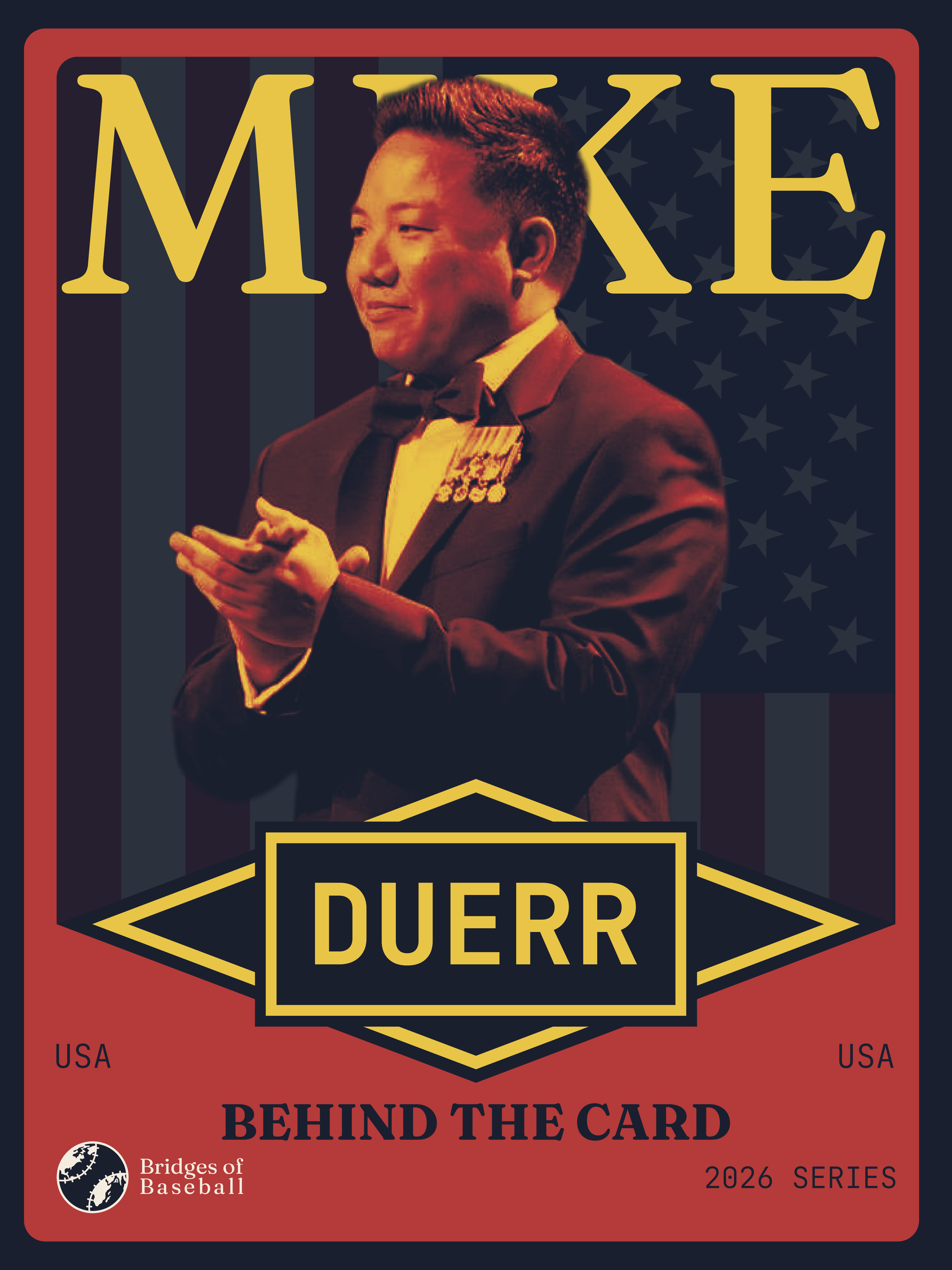
Behind the Card
A 1965 baseball card led a Korean-American from Minnesota to the U.S. Army, and to the question of where he belonged—in the line-up and beyond.
I was nine years old, sorting through a 500-count box of vintage cards, when I found a 1965 Topps Giants Rookies card, number 282. Dick Estelle was on it, and so was Masanori Murakami. You can find one today on eBay, anywhere from $25 ungraded to $250 depending on the condition.
Developing your sense of identity, or how you view yourself, is one of the rites of passage we all face during our early formative years.
Growing up and collecting cards in 1990s Minnesota as an adopted Korean in a mixed-race family, I knew early on that I didn't fit the visual mold of my middle-class suburban environment. One of the more common experiences among Korean adoptees is the "Twinkie" stereotype—white on the inside, yellow on the outside.
I was raised within Midwestern white culture, but I didn't look the part. I looked Korean but had no connection to Korean culture. I grew up with the odd contradiction of not looking how I was raised and not being raised how I looked. I always felt slightly out of place—not because of overt racism but because of an underlying sense that I never quite fit in either world.
Despite that, I had what I consider a normal childhood. I liked the same things my friends liked and did what every other kid in 1990s Minnesota seemed to do.
Naturally, the Minnesota Twins and little league baseball dominated much of my childhood. Meet any Minnesotan and they’ll tell you all about the 1991 World Series. I played Little League, collected, and like nearly every boy my age, dreamed of becoming a Major Leaguer.
I wasn't an especially talented player, but I vividly remember the day my Babe Ruth League coach made me the leadoff hitter because I had the discipline to lay off bad pitches and draw walks.
Despite everything else I may have accomplished in my forty-plus years, I'm fairly certain that remains one of my dad’s proudest moments for me.
Baseball cards were just as formative, though perhaps for different reasons than most of my friends who collected too. While I loved collecting my favorite Twins players—Kent Hrbek, Frank Viola, and Greg Gagne—I became fascinated with vintage cards.
The prized card of my childhood collection was a 1952 Topps Eddie Kazak card, purchased with my entire weekly allowance at my local card shop. My friends couldn't believe I spent all my money on a single old creased up card when I could have bought several packs of 1990 Topps instead.
But to me, it was the closest I would ever come to owning the holy grail of baseball cards: the 1952 Topps Mickey Mantle. Sadly, that remains true even today.
As much as I loved those old cards—and still do—they also reinforced something I hadn't fully understood when I was little sorting through a stack of them. The game I loved didn't seem to include anyone who looked like me. From Little League to the Major Leagues, I don't remember seeing another Asian player. This was long before Ichiro Suzuki arrived in America.
Then came the day I picked up the Estelle-Murakami card.
There, staring back at me, was an Asian baseball player. Until that moment, it had never even occurred to my nine-year-old self that someone who looked like me played in the majors.
It would be decades later, with the arrival of the internet, that I learned Murakami had been the first player from Japan's Nippon Professional Baseball League to cross over into the MLB. But as a child, I didn't know any of that. I only knew that someone who looked like me had played the same game I loved.
Looking back, I don't think I had the words to describe what I was feeling. I simply felt affirmed. Baseball suddenly felt like a place that was for me as well.
What struck me even more was that Murakami's card was more than thirty years old at the time. Long before I was born, someone who looked like me had worn the uniform and played the game.
It would take another thirty years before another Japanese player would play in the majors, when Hideo Nomo debuted with the Los Angeles Dodgers in 1995. Nomo enjoyed a thirteen-year Major League career, paving the way for Ichiro Suzuki—all the way to today with fourteen Japanese players and three Korean players on 2026 Major League rosters.
As a teenager, I eventually learned about Japan's long baseball tradition and later Korea's growing contribution of players to the game. Today, Shohei Ohtani has become a global phenomenon who has been nothing but a major representation of Asians in baseball. But before all that, my own baseball career had reached its natural conclusion. Like so many young athletes, my dreams of the Major Leagues faded in high school, as my poor fielding and lackluster hitting let me know that I was maybe meant for other pursuits.
I realize that baseball's greatest impact on me wasn't discovering Asian players or collecting their cards. It was finding a place where I simply belonged.
On a baseball team, you’re not defined by your identity, your appearance, or your background. It's defined by what you contribute to the team. Success and failure are built on how I contributed on the field.
That became the lesson I carried with me. I wanted to be defined by my actions rather than my appearance. My contribution at the present mattered more than my ethnicity or history. Whether or not I recognized it at the time, baseball helped me reconcile what had once felt like a contradictory upbringing.
During high school, I continued competing in baseball and track & field while gradually setting aside many of my questions about race and identity as I looked toward post-graduation.
But, that same 1952 Topps Eddie Kazak card also sparked another lifelong passion: military history.
Private Eddie Kazak parachuted into Normandy on D-Day. During the fighting, he was stabbed in the arm by a German soldier's bayonet, and enemy artillery shattered his right elbow with shrapnel. Doctors doubted he’d step on a baseball field again as a professional.
On the back of the Kazak card, the brief sentence covers: "His elbow injured by German fire during World War II, Eddie was told by doctors he'd never play ball again."
Yet after multiple surgeries and eighteen months of rehabilitation, he returned to professional baseball in the spring of 1946, playing for the Columbus Cardinals until eventually being called up to the active roster for the St. Louis Cardinals. He played four seasons as their third baseman.
I guess players were built tougher back then.
Through this one baseball card, I was introduced to this incredible story—and to the broader history of Major League players who served during wartime.
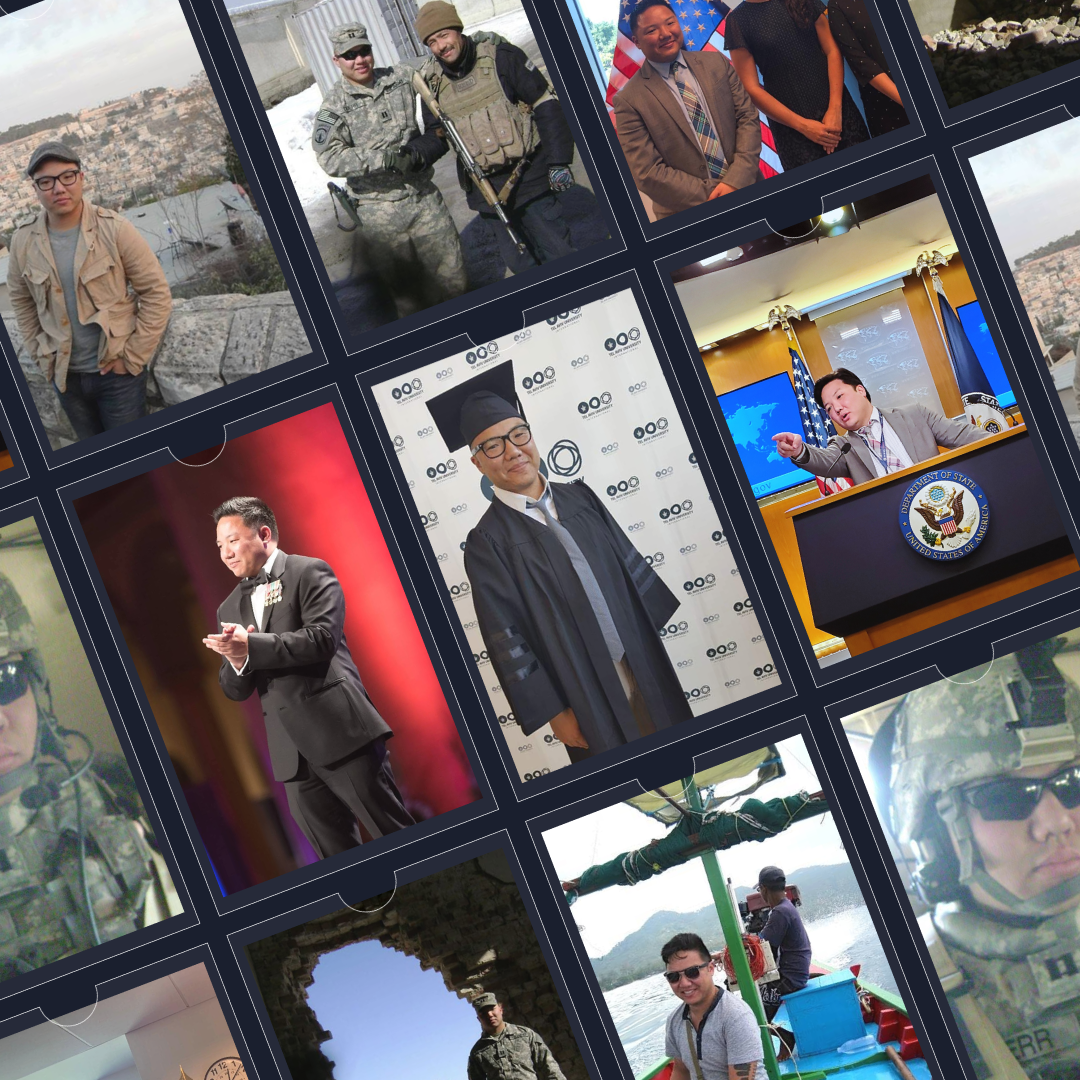
This convergence of baseball and military history heavily influenced my decision to attend the Virginia Military Institute, and later gain a commission as a U.S. Army officer. Both environments emphasized teamwork, shared purpose, and selfless service above the individual. The very qualities that had first drawn me to baseball.
The connection between baseball and the American Military goes back as far as the creation of the game. One of the earliest known photos showing a game of baseball being played dates to the American Civil War with Union Army soldiers playing a pickup game in the background of a Regimental photo at Fort Pulaski, Georgia in 1862.
After becoming America’s favorite pastime, it followed American soldiers in every U.S. conflict to this day. During World War II, it reached the zenith of its impact on the U.S. service members, professional players, and the game itself—with 599 of then current or future Major League players having served.
Their stories are numerous and inspiring. 45 wounded in combat (including 3 Hall of Famers), 45 awarded combat decorations (plus two former Minor League players who were awarded the Congressional Medal of Honor), and 8 future Major League players who were Prisoners of War (POWs) before their playing days.
And those numbers do not account for the sacrifice of the 4,076 minor league players who served, many of whom never made it to the majors.
Around 2016, I rediscovered my childhood baseball card collection and began collecting again. This time, I’m exploring this long intertwined history of baseball and military service. Like my childhood years, it’s introducing me to new stories and new rabbit holes to chase—incredible playing careers and stories of sacrifice, from Civil War veterans through World War II to Vietnam.
After more than a decade in the U.S. Army, including multiple deployments to Iraq and Afghanistan, I faced many of the same challenges my fellow veterans experienced when transitioning out of military service. I struggled to figure out what came next and how to reconcile my own experiences of war.
In researching the stories of these ballplayers and their military service, however, I found a surprising source of inspiration and understanding.
Many of these players became part of a broader postwar generation of Americans determined to make something meaningful of their wartime experiences.
When Warren Spahn was interviewed in 1965 shortly after his retirement from the game, a journalist asked him how he felt losing 3 years of playing baseball to the war. Spahn replied that he might not have enjoyed such a long and successful career without the military's influence. His service had given him an opportunity to grow up, develop discipline, and build resilience.
Warren Spahn was a combat engineer who was wounded while attempting to keep a vital bridge over the Rhine river intact, an action which resulted in him being awarded a battlefield commission. Together with Yogi Berra and Hoyt Wilhelm, he is among the few Hall of Famers wounded in the war. Along with many players who—under different circumstances—may have been stars in their own rights.
Their experiences helped put my own military service into perspective and showed me a path toward my next chapter: continued public service as a Department of State public diplomacy official and, now, Department of Justice civil servant.
That work runs on the same thing baseball does: being a contributor to a team. I represented the United States abroad, negotiated international cooperative agreements, and worked through relationships to resolve problems before they became conflicts. Baseball is a game of shared roles and small moves that add up, and it keeps spreading around the world, creating new links that people connect over.
As for my cards, it’s now a collection of collections. I began going after the pioneers of Asian American baseball players. That journey started with Bobby Balcena, the first Asian American—and the first Filipino American—to play just two games in the Major Leagues in 1957, before spending nearly a decade in the minors.
It continued with Mike Lum, whose fourteen-year Major League career made him the first Asian American player to appear on an official issued Topps baseball card.
And more recently, it continues with utility man Rob Refsnyder, an adopted Korean American whose story, in many ways, echoes my own.
Reflecting now, I see that my love of baseball and collecting baseball cards was, in many ways, about connecting with others who shared something of my experience. Their stories showed me that I wasn't alone in those pursuits.
Ultimately, it was about discovering that there was never any contradiction between who I was and where I belonged:
Defending my country overseas. Contributing to my community here in Maryland. In the lead-off spot, laying off the junk and taking my walks for the team.
Donate to Student Veterans of America here:
Edited by Trevor Gomes
Bridges of Baseball
Stories only baseball can tell.


© 2026 Bridges of Baseball · All rights reserved