Bridges of Baseball
Be the first to read long-form baseball stories delivered monthly.
For the Island and My Father
A product of Puerto Rico and New York returns to the island, working in the game his father taught him.
The crack of the bat echoed through Hiram Bithorn Stadium as Puerto Rican flags waved in every direction. Drums pounded from the stands, chants rolled through the humid San Juan air, and a warm breeze pushed through the palm trees surrounding the ballpark.
As I stood on the field with my camera in hand, preparing to document another chapter of Puerto Rico’s World Baseball Classic journey, I found myself thinking less about the game unfolding in front of me and more about the road that brought me there.
Because this wasn’t just another cross-country assignment or invitation to capture batting practice.
This was home. And in many ways, it was a journey that started long before I ever picked up a camera.
Growing up, Puerto Rico meant family stories, summer visits, traditions, and conversations around the dinner table. It was part of my identity long before I understood what identity even meant. I’m a New Yorker and a Puerto Rican, one of the lucky ones who can find a way to call both the greatest city in the world and the greatest island in the world their home.
Baseball carried these connections even further, even when it was difficult. The common language spoken between generations and divides, whether on neighborhood fields, in living rooms, or inside packed stadiums.
No one embodied that connection more than my father.
My father grew up in Aguadilla, Puerto Rico. It’s the northwestern tip of the Island, where you can draw a straight line almost exactly 80 miles east to San Juan.
Life wasn’t always easy for him. Raised alongside his siblings by my grandmother, he learned resilience at an early age. Like many Puerto Rican families, they didn’t have much, but they had each other. They also had baseball.
The game became one of the constants in his life: a source of joy, pride, and community. He carried that love with him everywhere he went, and eventually, he passed it down to me.
Some of my most treasured memories are tied to the time we spent together through baseball, in the Bronx at Yankee Stadium and in Brooklyn where we later called home.
I remember him picking me up from school and surprising me with an afternoon dedicated entirely to watching a Yankees game. We’d grab food, settle in together, and spend hours talking about players, debating decisions, and enjoying the simple act of sharing time.
Looking back, those afternoons—with all those early-2000s greats and unlikely heroes in the Pinstripes—were never really about the final score. Those moments were about connection. They were about a father who made time for his son and unknowingly shaped the person his son would become.
Then there were the trips to the old Yankee Stadium.
brought to you by
Duke’s Grocery:
Voted Best Burger in DC 10 years in a row.
Walking into that ballpark was like stepping into another world. The sounds, the energy, the history. It all felt larger than life. My father would often bring me down near the right field wall before games. We’d wait together, hoping to catch a glimpse of players during batting practice, maybe snag an autograph, or simply experience the excitement of being close to the action.
At the time, I thought those trips were about baseball. Years later, I realized they were really about dreams.
The Yankees did a lot of winning in those years for sure. But those afternoons taught me that sports become more stories and memories, than just wins or losses. They guide and connect us. And without realizing it, my father was teaching me how powerful those stories could be.
That lesson eventually became the foundation of my career, my identity, and my own growing family.
Anyone who's spent even a few minutes in New York City feels how each city block becomes alive and filled with people of all backgrounds. The City has a way of turning difference into common ground. You feel it in the small moments, walking through the Bronx or Brooklyn on a summer night. And in the big moments: the long-awaited Knicks championship, the annual National Puerto Rican Day Parade, and the World Cup. All in one month, June 2026. Man, I’m still trying to catch up.
These neighborhoods are where I built my community, my inner passions, and myself. It’s also where I learned to communicate with the world.
For me, that’s meant Spanish borrowed from New York’s Ecuadorians, Dominicans, Mexicans, and many other joining together with my native PR-inspired Spanish. It’s what the City calls for, in all its diversity.
But on trips back to Puerto Rico, it wasn't always that simple. People who would grow to become my closest friends on the island balked at first—picking up on my unique style of Spanish and hearing I was from New York. The hesitation is natural anywhere, whenever something arrives that sounds a little different.
It’s true, I’m a “Nuyorican” as many will say: part Puerto Rican, part New Yorker. And from my father, I learned how that could be one of my greatest strengths.
The guy could talk, and my dad talked to everyone. The hot dog guy outside my school growing up, the cell phone vendor another block away, and everyone else we’d pass by—all on what should’ve been my 5-10 minute car ride home from school. He’d be doing it all from the car window, catching up with those in our community and building lasting bonds. Bonds that even continue to this day, whenever I’m back in Brooklyn visiting those same people. He took the time to be present and connect with others, never talking down to anyone. He respected everyone.
It meant those short car rides home from school, when I just wanted to get back and unwind as a kid, would run 45 minutes. Sometimes an hour. I appreciate those lessons more than I would’ve thought back then. Leading with respect.
So when I'd find myself in those situations, unsure how I'd be received at first, I always knew what to do. To lead with respect.
Puerto Rico’s an incredibly welcoming island, and it’s fitting that I learned how to best find my way through those lessons I picked up from my father, originally from Aguadilla.
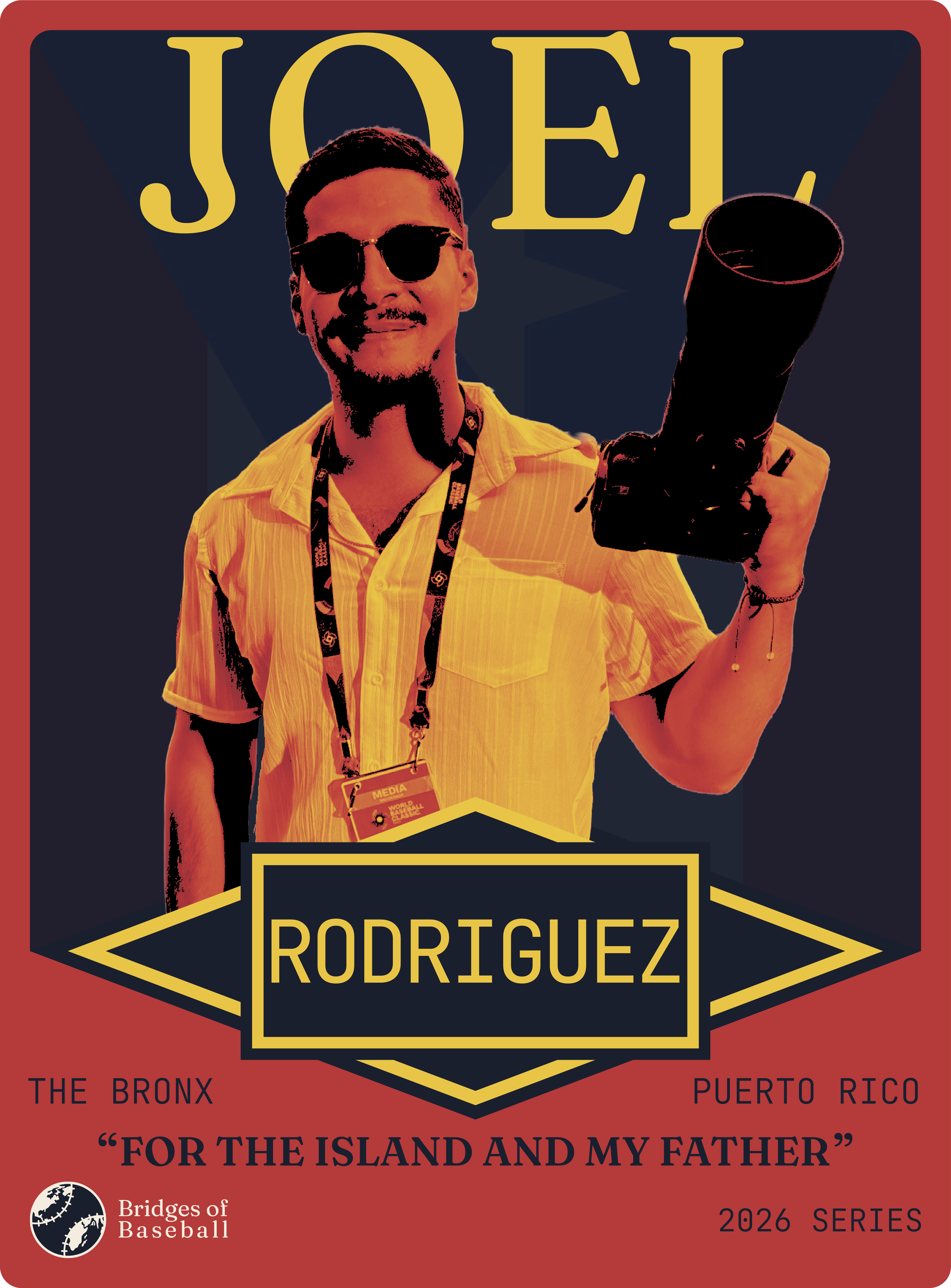
Over time, I realized that this same respect and openness to connect with others is what I try most to bring to those I cover, every time I step behind the lens.
My path into sports journalism began with a camera, a dream, and a willingness to work. Offering photography for free, traveling on my own dime, editing content late into the night. Wondering whether any of it would amount to anything. But I kept showing up.
Some nights you can get caught going through the motions. I sign up to cover a midseason high school basketball game in Manhattan, or the neighborhood festival that brings out the same committed 250 people each year, and for a few moments I forget why I’m there. But then I’m reminded: it’s the dreams, the tensions, and the countless once-in-a-lifetime moments I’m tapped to capture on any given night.
Over time, people began recognizing my work. Athletes remembered me. Organizations trusted me. Eventually that led to Latino Sports—and without them, I would not have been traveling the world covering baseball.
Standing there, in Hiram Bithorn Stadium, carrying everything that came before—my father's island, my city, the years it took to get here—is what made the moment so emotional.
This time, I was covering baseball—and all the drama that comes with an international tournament that only comes around every 3-4 years.
I was also honoring the man who introduced me to baseball. I was standing in the homeland that shaped him and, in many ways, shaped me.
As Puerto Rico took the field, the energy inside the stadium was impossible to ignore. Flags danced throughout the stands. Fans sang, cheered, and celebrated every pitch as if the entire island and Puerto Rican people were breathing together. You could feel the pride. I could feel the pride.
This Puerto Rican team may not have arrived with the same collection of superstars fans had grown accustomed to seeing. Names like Francisco Lindor, Carlos Correa, and Javier Báez were absent. Questions surrounded the roster from the start.
But what the team lacked in star power, it made up for in heart.
Every player understood the responsibility that came with wearing Puerto Rico across their chest. Every victory felt larger than baseball, because it represented something bigger than the players themselves.
That underdog spirit resonated throughout the tournament. It felt familiar.
Puerto Rico has always found ways to persevere. My father’s story reflected that, as did my own years later. This 2026 team reflected it as well.
Capturing Eddie Rosario deliver in a clutch moment. Experiencing Darrell Hernaiz send an entire community into a frenzied celebration with a dramatic walk-off home run. Watching thousands of Puerto Rican fans embrace every high and low together. It all felt like a reflection of who we are as a people. Different backgrounds and life stories, united by the flag and the team taking the field. Resilient. Passionate. Proud.
As the tournament unfolded, there were moments when I found myself pausing to take it all in.
Not because I was overwhelmed by the event itself, but because I understood what it meant. The little boy standing beside his father near the right field wall at Yankee Stadium could never have imagined this moment.
Covering the World Baseball Classic was about honoring a legacy that started long before I ever entered a press box. It was about recognizing the sacrifices, lessons, and memories that shaped my path. Most importantly, it was about celebrating a father-son bond built on a shared love of the game.
As I looked out at a sea of Puerto Rican flags waving beneath the lights of Hiram Bithorn Stadium, I couldn’t help but think of the man who first brought me to a ballpark, who taught me to love the game, and unknowingly who gave me the foundation for everything that came after.
And in that moment, standing in our homeland while covering the game of baseball on one of its biggest stages, the journey felt complete. I lowered my camera for a split second—to take it in once more, to think about everything that brought me here.
It felt like coming home.
Edited by Trevor Gomes




© 2026 Bridges of Baseball · All rights reserved