



All Stories
/
Op-Eds
Trump's Path to a Nobel: A Diplomatic Grand Slam in Venezuela
Could baseball do what two decades of diplomacy couldn't? Former U.S. NSC senior director Mark Feierstein - who helped orchestrate the historic 2016 Tampa Bay Rays game in Havana - makes the case that Venezuela's 2026 World Baseball Classic title offers President Trump, Venezuela's political leaders, and its people an opening for reconciliation and peace.
Written By
Mark Feierstein
Published
August 18, 2026
1951 usa v. venezuela
Donald Trump has long coveted the Nobel Peace Prize, but had to settle last year for an ersatz award from FIFA, the international soccer federation.
He does, however, have a genuine opportunity to use sport to enhance his peacemaking credentials by bringing political rivals together and advancing reconciliation and democracy – in baseball-obsessed Venezuela.
The South American country the U.S. military invaded in January to extract its leader, Nicolas Maduro, remains locked in a bitter political struggle. The unpopular U.S.-backed interim government has been making economic concessions to the Trump Administration to hold on to power, stave off pressure to schedule elections, and prevent the popular exiled opposition leader from returning home.
Opposition efforts to accelerate a transition to a democratic future have so far been rebuffed.
A few things do unite Venezuelans, however. Most agree a swath of Guyanese territory belongs to Venezuela, a claim now before the International Court of Justice. They take pride in a flair for glamour that has produced multiple Miss Universes.
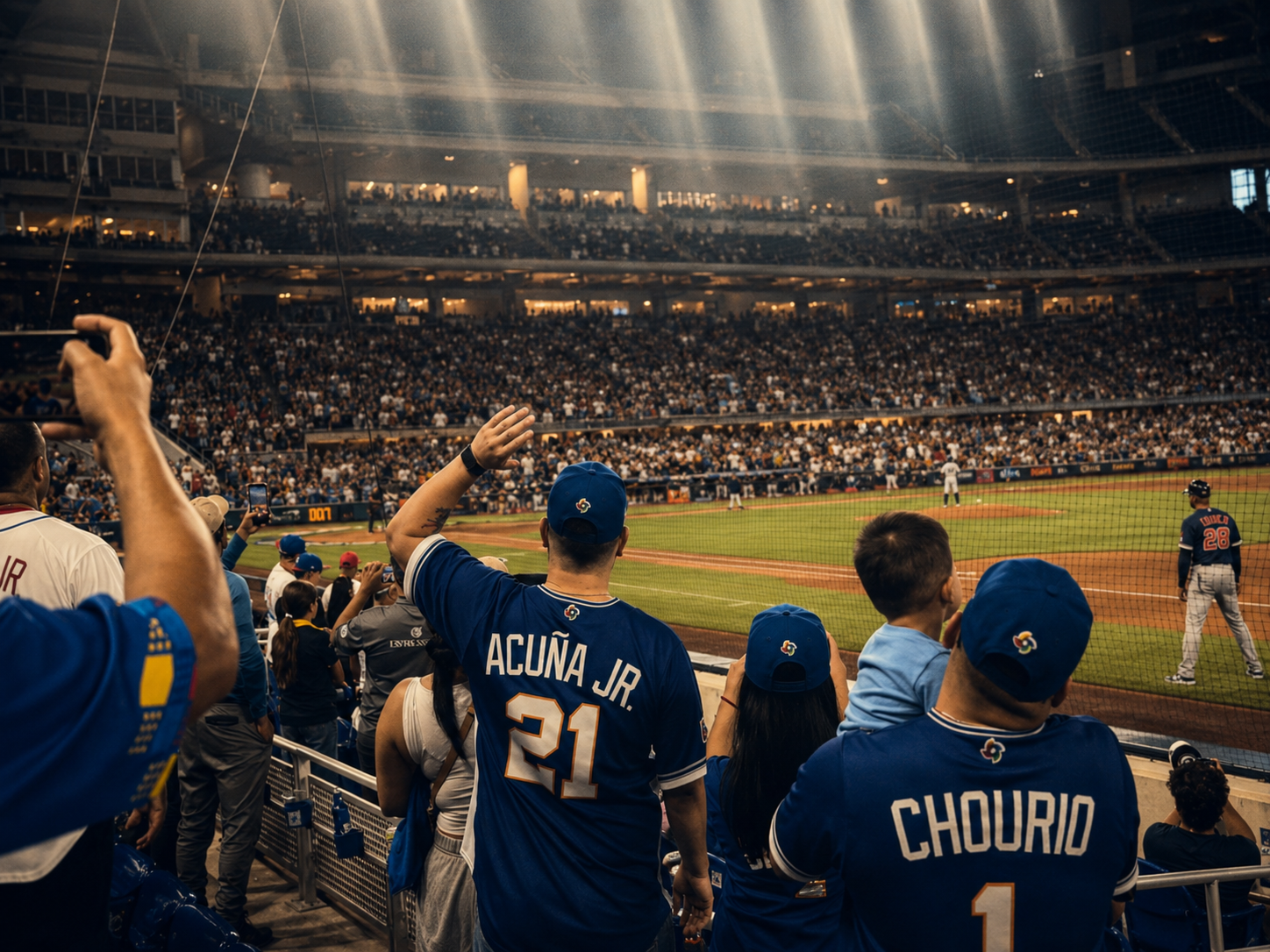
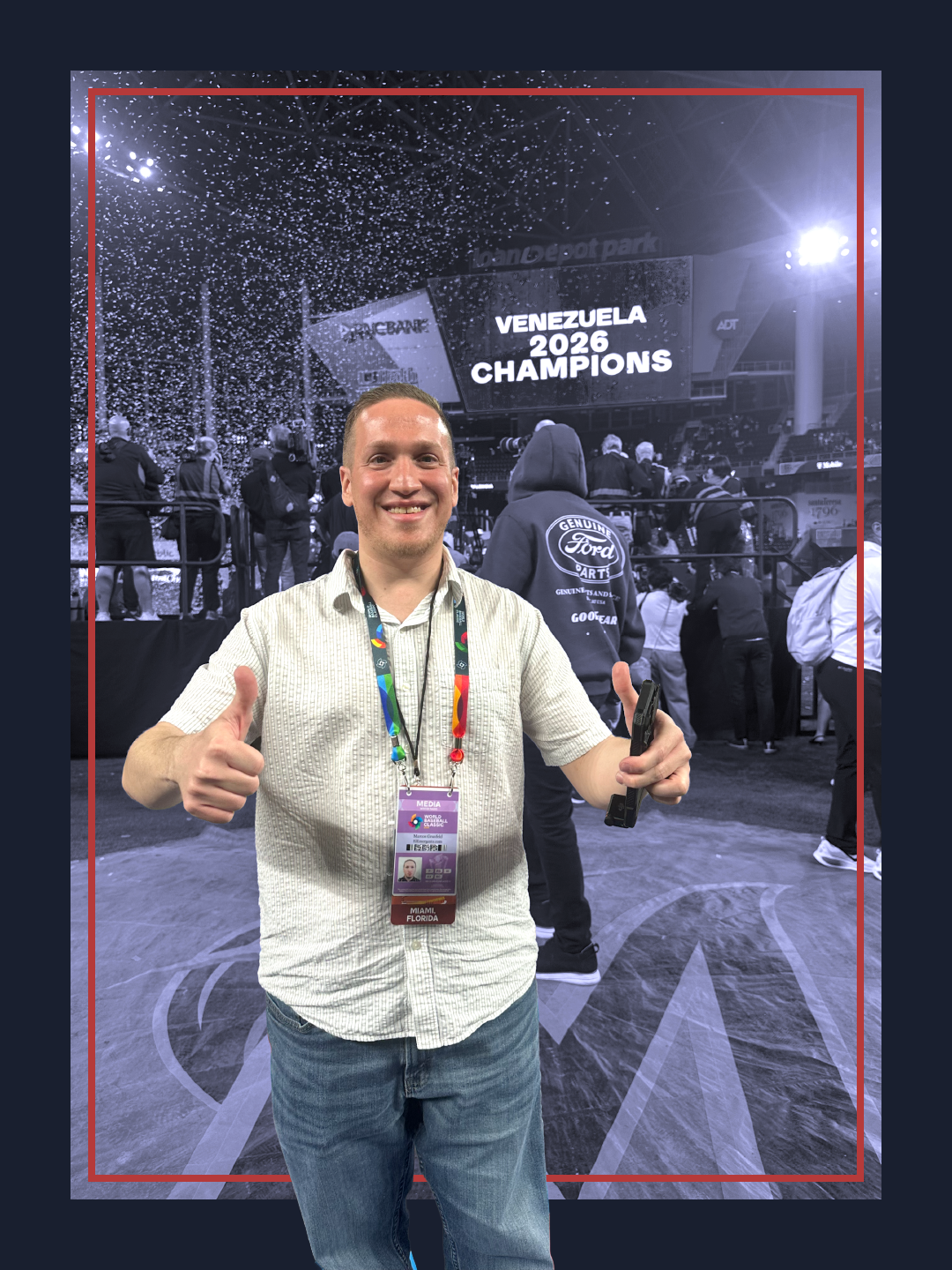
But nothing brings the country together like baseball. After a clip of a Venezuelan man with a disability and his grandfather watching the 2026 World Baseball Classic team from a tiny 1980s television went viral, the neighborhood united and threw a watch party for them – complete with a new flat screen. And when Venezuela swept through the tournament and defeated the United States in the final in March, the whole country celebrated.
Unlike Cuban or Iranian nationals who are divided over their allegiance to national teams associated with an autocratic government, Venezuelans across the political spectrum embraced their baseball squad. After the victory in the Classic, Acting President Delcy Rodriguez, a longtime fixture in Maduro’s government, declared a national "Day of Joy" and received the trophy at the presidential palace from the head of the Venezuelan Baseball Federation.
Meanwhile, opposition leader and 2025 Nobel Laureate Maria Corina Machado posted on line: "We're world champions! What pride to be Venezuelan."
For a couple decades, efforts to bring the political sides now led by Rodriguez and Machado together via international mediators have failed.
Might there be a role, then, for baseball to advance political reconciliation?
There is a long tradition of sports diplomacy defusing conflict around the world. Most famously, “ping-pong diplomacy” helped thaw relations between the United States and China in 1971 when an American table tennis team became the first U.S. delegation allowed into China since the Communist Revolution in 1949.
Sport has also helped a country’s internal reconciliation. President Nelson Mandela used the 1995 Rugby World Cup to unite post-apartheid South Africa by supporting a team previously viewed as a symbol of white supremacy. More recently, at the 2018 Winter Olympics in Pyeongchang, sport brought a divided people together when North and South Korean athletes marched under a Korean Unification Flag.
Baseball has bridged nations too, most notably the United States and Cuba. The Orioles played the Cuban national team in Baltimore and Havana, paving the way for a 2016 game between Cuba and the Tampa Bay Rays in the Cuban capital attended by Presidents Barack Obama and Raul Castro - a contest I had the privilege of helping orchestrate as a White House official. The profound differences we had with the Cuban regime were forgotten for a couple hours among the roars of the bi-national crowd.
The value the United States places on sport as a tool of foreign policy is reflected in the State Department’s own Office of Sports Diplomacy, originally established after the September 11 terror attacks to help the U.S. engage youth across the Middle East through soccer.
In the wake of last month’s twin earthquakes in Venezuela, which have claimed the lives of more than 6,000 people and hospitalized roughly 70,000, it is more necessary than ever for the United States to employ all levers at its disposal to help the country rebuild.
On the humanitarian side, the United States has already provided $300 million. Other donors have stepped up too, with contributions pouring in from all over the world.
Major League Baseball and its players union did their part with a joint $1 million donation to relief efforts. Venezuela is a vital piece of the baseball world, ranking second to the Dominican Republic as a source of foreign talent for MLB.
But all those contributions are far more likely to be used effectively and inclusively if Venezuela has transparent, democratic governance.
A possible step toward that goal began this month as government and opposition representatives opened talks on what the State Department described as a “roadmap for a political dialogue on a democratic transition.” Questions remain, however, over how successful those talks can be, as Machado has thus far been marginalized in the planning.
This is where baseball could come in.
After Venezuela’s World Baseball Classic victory, Rodriguez hoped to host the Venezuelan team in Caracas for a celebration. That proved impossible, with the MLB regular season about to start.
But the idea could be revived during this year’s post-season, albeit with a twist.
Trump has mused about visiting Venezuela to revel in the removal of Maduro and the country’s status as, in effect, a U.S. protectorate.
What if his trip coincided with an exhibition game in honor of the WBC championship team and he invited Machado and Rodríguez to attend with him? Neither woman would relish the meeting, but both would feel obligated to accept an invitation from the figure whose decisions now shape Venezuela's future.
The scene would not just make great theater, to Trump’s delight, but could serve as an opening for an authentic dialogue involving the two most important figures in the country. Venezuelans, polarized by politics, would be reminded they share a national identity and the potential of a stronger future that baseball, and a once-in-a-generation championship team, can help produce.
Little else has worked in Venezuelan negotiations so far. Maybe this is the pitch that finally delivers – and gets Trump his prize.
.png)