



All Stories
/
Essays
Young Arms, Big Risks: The Hidden Costs of Youth Travel Baseball
After seven seasons coaching travel baseball, a phone call about a former player's fractured elbow forced one coach to confront a hard question: in a $39 billion youth baseball industry built on seven-game weekends and year-round schedules, is doing everything right still enough? A personal reckoning with the game he loves — and one answer for how to slow it down.
Written By
Nick Balsamo
Published
September 9, 2026
.png)
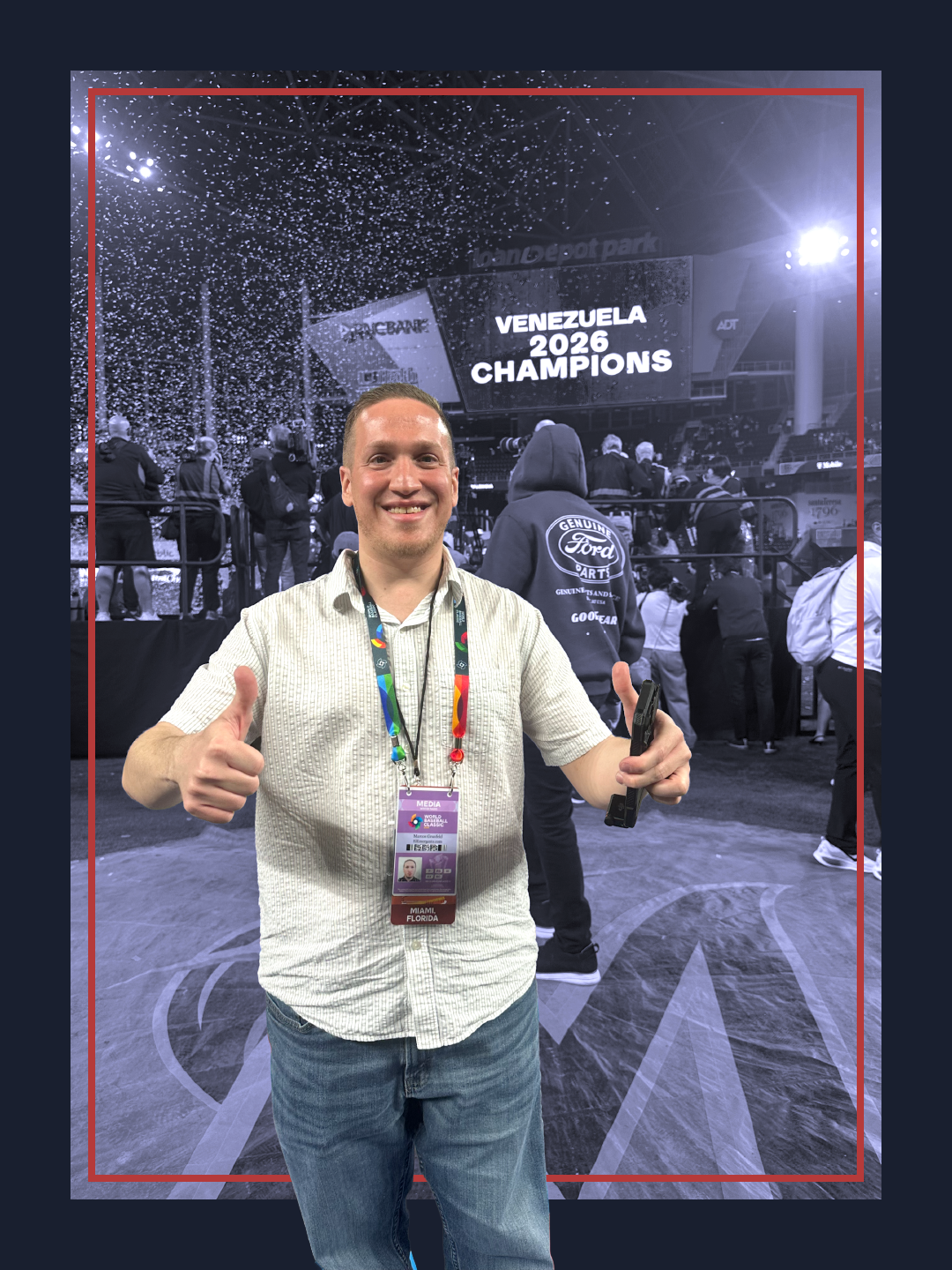
1951 usa v. venezuela
Section 1: The Call
My phone rang.
It was a random weekday in the fall of 2025. I had just wrapped up my 7th season as a travel baseball coach, and I decided to take the fall season off. I needed to take a step back.
On the phone was a former player's parent. The player was 13 years old and had just been diagnosed with a fracture involving the growth plate in his elbow. It was a serious injury, as surgeons needed a screw to hold the broken piece in place where key throwing muscles and ligaments attach. This makes the still-developing bone especially vulnerable in young pitchers.
The need for fixation suggested that the fragment had pulled away far enough to require surgery. It likely meant months of rehabilitation, follow-up imaging, and a carefully staged throwing program before the player could safely return to the mound. In one study of throwing athletes with comparable medial-epicondyle avulsion fractures, the average return to play was 7.6 months.
My reaction was a mix of self-blame: “Did I overuse him? Did I not protect the player enough? Should I have pushed back with my organization when creating the schedules? Do I blame the players' new coaches? Whose fault is it?”
Two years before the call, I had coached the player from ages eight through eleven. During my time with that team, I had done everything prescribed in terms of arm health: arm band routines, specific pitch count thresholds laid out by MLB and tournaments, and never pitching a player on back-to-back days. I diligently tried to keep track of throws by my catchers, third basemen, and shortstops.
This player and his teammates were the first team that carried my identity as a newer coach, so saying we were a team almost feels like an understatement. Especially when you look at the schedule we played and the hours we put in together.
My north star as a coach had become: I don’t care if we win any tournaments throughout the season big or small. I do want the kids to compete and I do believe winning is a part of development, but most importantly, I care that my players are healthy enough to still compete by their senior year of high school.
The truth is though, the team did win. They actually won a lot. We added multiple USABL tournament championships to the shelf, and always had solid showings at larger tournaments like Ripken and other out-of-state competitions. During my final year with the team, I had to make a call where we separated from the organization we were competing under due to a situation out of our control. I went to one organization, and my team went to another.
On that fall day of the phone call, the dad told me his son was having a great season, pitching deep into games and getting batters out prior to the injury. This wasn’t the first call like this I had received, and I’m just one coach of many around the world receiving them over the course of the seasons. It doesn’t make the words sting less.
Throughout a travel season, a team can play anywhere between roughly 60 to 100 games total per year. On the East Coast, where I coach, the spring and summer seasons bring a higher volume of games before 2-3 weeks off. The fall season picks up after the short break, and although inclement weather can sometimes help with reducing pitcher and catcher load, there are more games to be played. The holiday season provides another short period of rest, but indoor workouts begin directly after New Years. And then it's time to begin the cycle all over again. As I continued my focus on injury prevention and the challenges of the current systems in place, I was re-evaluating how I wanted to participate in the game of baseball.
Section 2: The Dream
Baseball and I have been synonymous since preschool picture day, where the silly outfit my mother had picked out for me included a baseball with a Dodgers logo in my hands. Not Shohei Ohtani’s Dodgers, Fox Entertainment Group’s Dodgers.
I remember my first game at Dodger Stadium—and the Piazza homer. I don’t recall who won or even who the Dodgers were playing, but I knew one thing: “Mike Pizza” was now my guy.
Until he was traded. I still remember the L.A. Times article breaking the news, the incomprehensible sight of Piazza in a Marlins uniform, then the whiplash of visiting my New York cousins and seeing a sea of Mike Piazza blue and orange jerseys.
The rest is what you’d expect from a middle and high school baseball die-hard.
Skipping 6th period P.E. (my favorite class) to watch the Dodgers play the Mets in the playoffs. Shawn Green to Jose Valentin to Paul Lo Duca,a once in a century perfect relay, to cut down both J.D. Drew and Jeff Kent at home plate.
Then later, being lucky enough to play in a CIF (California Interscholastic Federation) championship game at Dodger Stadium. I started in right field—the right field—and remember looking up to see the 1988 World Series championship pennant. Greatness, all right here and all right before I was born. An inning later,I laid down a sacrifice bunt to score the game’s first run.
Small ball, core memories, and all in all a true baseball childhood. I was only in grade school when we were asked what we wanted to be when we grew up. My list was:
1. Baseball Player. 2. Baseball Agent.
Over the years though, life continued. I later became a cog in the rise-and-grind machine of New York City. I was fresh out of college at a marketing agency, and had to be in the office from 8:30 AM until the work was done. I wanted to learn how to analyze data so I could eventually work for an MLB front office, but I was not achieving any of my goals or gaining necessary experience.
One evening, I sat down on a bench outside my house on Ocean Parkway in Midwood, Brooklyn. Not too far from Old Ebbets Field and Prospect Park, the old stomping grounds of baseball legends Joe Torre and Sandy Koufax. With my head hanging low, I was greeted by a man named Bob Webber, a real Boys of Summer Dodgers fan and member of the Pee Wee Reese fan club. He set foot many times in Ebbets Field as a child.
He approached me to ask what was wrong, and I admitted to him that I didn’t enjoy my work anymore because I wanted a career in baseball.
“If you want to work in baseball, you need to be on baseball fields,” he told me. I was inspired by this stranger’s words to take action, and found a new job for a youth sports organization as a travel baseball coach shortly after. I’ve been in pursuit of working for a Major League club ever since.
Section 3: The Machine
The good old days didn't last long, though, because youth baseball in New York isn't what it used to be. You can't stroll down a block on the weekends or a summer day and see sandlot baseball being played anymore. There might only be two little leagues left in Brooklyn, but there are at least 20 travel baseball teams.
Every weekend, New York families wake up at the crack of dawn to travel to New Jersey, Pennsylvania, Maryland, upstate New York, or Long Island for tournaments. My local New York team plays other local New York teams, sometimes dozens of miles out of state, with looks of confusion on our faces.
Looking at the coaching side of the equation, it's a mixed bag. Some are chasing trophies, running pitchers into red zones, and starting kids on back-to-back days. Those are real failures and issues to address. But sometimes even doing everything right isn't enough, as that phone call made evident. Two years after the player left my team, he still ended up facing his elbow injury, with restrictions on both pitching and fielding for the entire spring season. The pressure doesn't come from one coach's choices. It comes from a calendar, an industry, and a system that outlasts any single move a coach makes.
From my perspective, families and travel organizations bring a lot of business to these tournament locations through hotels, meals, and playing fees. The real culprit behind youth arm injuries is the travel industry setup. Seven-game tournaments in a single weekend are detrimental to players' health, but they earn new, heavily capitalized baseball companies hundreds of millions of dollars per year. According to Wintergreen Research, the travel baseball industry generates $39 billion a year and is expected to reach $72 billion by 2029. To compare, the NFL generated $18 billion in 2022, the highest of any American professional sports league.
And I have to be completely honest: I wouldn't be able to coach and make a living if there wasn't money being generated from team fees. But the business aspect of the sport has changed the game so much from what it used to be. That's also why the system is pushing these youth athletes to their limits.
Long-term, no one knows what these new standards will mean for the game's future. Many of the youth players we prepare for the next levels have already had major surgery, injuries, and mental health related challenges before even entering college leagues.
In last month’s widely-shared New York Magazine feature “Pay to Play,” contributing writer Caitlin Moscatello spotlighted sport-and-performance and health psychologist Matthew Sacco. The Cleveland Clinic figure shared: “I’m getting many, many, many, many more asks for younger kids than I’ve ever had.” Moscatello continues: “…when Sacco speaks with the child alone for the first time, that’s when they tell him that they’re not having fun anymore, that their body is constantly sore, that it’s been injury after injury. On rare occasions, he closes the door and they say outright, ‘I’m over this. I’m done. I don’t want to play anymore.’”
As we’ve seen, the best predictor of future injuries is prior injury history.
It's not limited to the U.S. either. As research grows and best practices take hold, coaches and baseball figures in other countries should share recommendations with each other so we can protect and build up pitchers the right way.
Player health is supposed to be the coach's job. But right now, it's also the hardest one to actually do.
Section 4: The Way Back
With the Little League World Series just behind us, youth baseball — especially on the national and global stage — is as entertaining and fun as ever. This year, Curaçao broke a 20+ year title drought, the island's first championship since future Big Leaguers Jurickson Profar and Jonathan Schoop's 2004 squad won it all.
From the beginning though, the tournament's opening game alone gave us one of its most exciting performances, and also a difficult dilemma that coaches know all too well. Nicaragua's Clemente Sevilla Pichardo, a 12-year-old lefty, was dominant in his first start of the tournament. He recorded a whopping 12 strikeouts over 5⅔ innings against the Dominican Republic. With one out left to go, he tapped his elbow and signaled to his coaches that something wasn't right. The coaches brought in their relief pitcher and moved Clemente to right field instead of the dugout. Minutes later, while still in obvious pain and discomfort and with the tying run rounding third, he fielded a single from the outfield and fired a strike to the plate to end the game. Nicaragua won, 2-1. Clemente did everything right. He felt something, he said something, and his coach believed him enough to take him off the mound. And on the biggest stage, in the biggest moment, the game still found a way to put that same arm back to work.
For me, this read as a gray area moment for the coach and the player. We don't know the full picture of the situation or the relationship. But we can be glad that in this huge moment for their country, nothing more came of it and Clemente could finish what he started on the mound.
It doesn't always work out that way, and I think many fans of the game would be surprised how many players on regular teams on a regular weekend would make the same call of asking a player in arm pain to keep playing. Some organizations are run better than others. But overall, this new system has created a tinderbox. I can handle everything inside that tinderbox I signed up for. Hoping to get paid on time, having parents in my face about their kid's playing time, and the Monday morning quarterbacking.
But can I handle another phone call, from the parent of a player who's telling me about their kid's elbow being shot out from overuse pitching? Can I keep sustaining this system? We are spinning our wheels. Or in this case, circling the bases one too many times. Is this what the game was meant to become? If so, truly, what are we doing here?
The answer starts with slowing down enough to actually ask the question — what are we building, and who is it actually for?
For me as a coach, slowing down looks like this: piloting a developmental organization in New York built around educating players, bringing back pure play, and a 4:1 practice-to-game ratio. This would include fewer tournaments, maybe one or two, so players can get baseline metrics, build on them over the winter, and have material to send to college coaches. We'll bring in college coaches over Zoom for parents and players to ask their direct questions. It's not the answer, but it's one answer for now.
There's no clock in baseball for a reason. At almost every juncture, the game reminds us to take a breath. It allows our minds to wander and relive our past memories on the diamond — why we come back to the game, why we bring others along to it, why we're committed to fixing it. If we stop remembering this, and if we keep rushing kids through it the way we have been, I'm afraid we'll lose the game as we know it.